There is no single best social media platform for app promotion. The right one depends on who installs your app and what you can make every week. As a starting point: a consumer app for people under 30 belongs on Instagram and TikTok, a work app on LinkedIn and X, an app for parents on Facebook, and an app people plan with (recipes, budgets, workouts, trips) on Pinterest. Pick two networks, post for eight weeks, measure installs, then decide on a third.
This guide answers the question of where to promote an app. It compares eight networks on audience, fit, format and effort, using survey data and each company's own published numbers, all checked in October 2026. For what to post once you have chosen, read how to promote an app on social media, which covers each network step by step.
Where to promote an app: the numbers for each network
The fairest comparison comes from one survey that asks the same question about every network. Pew Research Center's social media fact sheet does that for U.S. adults: 5,022 people surveyed from February to June 2025. Pew did not ask about Pinterest or LinkedIn in 2025, so those two rows use its 2024 survey, and the gender and education splits come from Pew's 2023 survey.
Company numbers are in the third column, with a warning. They count different things (daily people, monthly users, members, registered accounts) and all of them are global, so you cannot rank networks by them. The last column is the median engagement rate by format from Buffer's 2026 analysis of more than 45 million posts, which tells you what kind of post each network rewards.
| Network | U.S. adults who use it | The company's own number | Who stands out | Format with the best engagement |
|---|---|---|---|---|
| 50% | No separate figure. Meta reports 3.60 billion daily people across its family of apps for June 2026 | 80% of ages 18 to 29, 62% of ages 30 to 49 | Carousels 6.9%, single images 4.4%, Reels 3.3% | |
| TikTok | 37% | More than 200 million Americans, stated January 2026 | 63% of ages 18 to 29, 42% of women | Video 3.39%, photos and carousels 1.92% |
| 71% | Part of Meta's 3.60 billion daily people | 80% of ages 30 to 49, 74% of ages 50 to 64 | Images 5.20%, video 4.84%, text 4.76% | |
| 32% (2024 survey) | More than 1.3 billion members | 53% of college graduates (2023 survey) | Document carousels 21.77%, images 6.52%, text 3.18% | |
| X | 21% | No current figure from X that we could confirm | 33% of ages 18 to 29, 25% of men | Text 3.56%, images 3.40%, video 2.96% |
| Threads | 8% | 500 million monthly active users, June 2026 | 15% of ages 18 to 29 | Video 5.55%, images 4.55%, text 2.79% |
| 36% (2024 survey) | 640 million monthly active users, 106 million of them in the U.S. and Canada, Q2 2026 | 50% of women, 19% of men (2023 survey) | Video 5.75%, images 3.15% | |
| Bluesky | 4% | Over 43 million users, March 2026 | 6% of ages 18 to 29, 6% of college graduates | Video 5 interactions, images 4, text 3 (median count, early data) |
Two things in that table surprise people. Threads reports 500 million monthly users worldwide, yet only 8% of U.S. adults say they use it, so a global number tells you little about your market. And single still images hold up well: they beat video on Facebook and X, and on Instagram they earn a higher engagement rate than Reels, although Buffer's data also shows Reels reaching 2.25 times as many people.
Social media platforms by age group
Totals hide the detail that matters most for an app, which is age. The same Pew survey splits every network by age group. YouTube, Reddit and Snapchat are included for comparison, because all three are larger than some of the eight. Pinterest and LinkedIn are missing because Pew did not ask about them in 2025.
| Network | Ages 18 to 29 | Ages 30 to 49 | Ages 50 to 64 | Ages 65 and older |
|---|---|---|---|---|
| 80% | 62% | 40% | 19% | |
| TikTok | 63% | 44% | 30% | 12% |
| 68% | 80% | 74% | 57% | |
| X | 33% | 25% | 16% | 10% |
| Threads | 15% | 10% | 6% | 3% |
| Bluesky | 6% | 5% | 3% | 2% |
| YouTube | 95% | 92% | 85% | 64% |
| 48% | 35% | 16% | 6% | |
| Snapchat | 58% | 31% | 13% | 4% |
For people under 30 the order is YouTube, Instagram, Facebook, TikTok, Snapchat. For people aged 50 to 64 it is YouTube, Facebook, Instagram, TikTok, and nothing else in the table passes 16%. An app for retirees has two realistic choices among the eight, Facebook and Instagram, and Facebook is three times the size.
Social media demographics by gender, income and education
| Network | Men | Women | Household income of $100,000 or more | College graduates | Rural adults |
|---|---|---|---|---|---|
| 44% | 55% | 60% | 58% | 37% | |
| TikTok | 30% | 42% | 30% | 29% | 32% |
| 63% | 78% | 71% | 71% | 71% | |
| X | 25% | 16% | 25% | 24% | 17% |
| Threads | 8% | 9% | 7% | 9% | 4% |
| Bluesky | 4% | 3% | 5% | 6% | 2% |
| 29% | 23% | 37% | 37% | 18% |
Three patterns in this table are worth acting on. Instagram use climbs with income, from 41% of adults in households under $30,000 to 60% at $100,000 or more, while TikTok runs the other way, from 42% down to 30%. An app with a paid subscription aimed at higher earners has more of its buyers on Instagram. Facebook is flat: 71% in cities, in suburbs and in rural areas, and 71% or 72% at every income level, which makes it the one network where you are not choosing a demographic. Rural adults are far less likely to use Instagram (37%, against 55% in cities), so an app for farming, hunting or small town services should lean on Facebook.
If most of your users are outside the United States
Pew surveys U.S. adults only. Worldwide, DataReportal's mid 2026 update, built on a GWI survey of internet users aged 16 and older, puts Facebook first at 56.3% monthly use, then YouTube at 55.3%, Instagram at 54.6%, WhatsApp at 54.4% and TikTok at 36%. With China and Russia left out, where many of these services are blocked or restricted, the figures rise to 73.4% for Facebook, 71.4% for Instagram and 47.5% for TikTok. The order barely moves, so the pairings in this guide hold up. Check which countries your downloads come from before you copy a plan built on U.S. numbers.
The best social media platform for app promotion, network by network
Each network below gets the same four questions: who is there, what kind of app fits, which format works, and how hard it is to keep up. Percentages are from the Pew fact sheet unless a different source is linked.
Half of U.S. adults use Instagram, including 80% of people aged 18 to 29. Use rises with income: 60% of adults in households earning $100,000 or more are on it. It fits consumer apps with something to look at, such as fitness, food, travel, photo, shopping and personal finance. Carousels and 4:5 still images carry the grid, so you can run it without video. Effort is medium: you need a designed image every time, and the design has to hold up at a glance. The principles are in what makes a good social media post.
Rhythm and link: in Buffer's study of 2.1 million Instagram feed posts, accounts that posted 3 to 5 times a week reached about 12% more people per post than accounts that posted once or twice, and the study treats 1 to 2 posts a week as enough to maintain an account. The App Store link goes on your profile, which holds up to five links. Put the App Store link first and write "link in profile" in the caption. Budget about an hour a week for two designed posts.
TikTok
TikTok reaches 37% of adults and 63% of those under 30. Pew's 2025 report found 24% of all adults open it every day, and roughly half of 18 to 29 year olds do. It fits games and consumer apps where the result is visible in a few seconds. The format is vertical video, and photo posts earn a little over half the engagement rate of video in Buffer's data. Effort is high. TikTok's creative guidance asks for a hook in the first 6 seconds and the proposition in the first 3, which means planning each clip.
Rhythm and link: Hootsuite's posting guidance, drawn from platform statements and interviews with social media managers, suggests 3 to 5 videos a week. For a solo founder that is the main cost of the network. The link is the other catch. TikTok's account help page says a general account needs at least 1,000 followers before it can add a website link to its profile, while a Verified Business Account can add one. Until then people have to search for your app by name, so show the icon and say the name in every clip. Budget two to three hours a week.
Facebook is still the widest network: 71% of adults, 80% of ages 30 to 49, 57% of people 65 and older, and 78% of women. In Pew's 2025 report 52% of adults said they visit daily, compared with 24% for TikTok and 10% for X. It fits apps for parents, families, hobbies, local services and older users. Image posts have the highest engagement rate, so the same 4:5 still you make for Instagram works. Effort is low.
Rhythm and link: Facebook lets the link sit in the post itself, which is the shortest path to the App Store of any network here. The trade is that link posts earn the lowest engagement rate of Facebook's four formats in Buffer's data (4.43%, against 5.20% for images), so upload the image and paste the link into the text above it. A Page with two posts a week looks alive. Groups for your niche take more time than the Page and often return more, and they are manual work: Meta's Graph API v19.0 changelog removed group publishing for outside apps on April 22, 2024, so no scheduler can post into a group for you. Budget 30 minutes a week when the image already exists.
About a third of adults use LinkedIn, and the audience is defined by education and work: 53% of college graduates were on it in Pew's 2023 survey, along with 40% of people aged 30 to 49. It fits B2B apps, productivity tools, developer tools, hiring, finance for teams, and any founder willing to write about building the product. Document carousels earn a 21.77% median engagement rate in Buffer's data, the highest of any format on any network they measured. Effort is low on design and higher on writing.
Rhythm and link: LinkedIn's own guidance for Pages says companies that post weekly see twice the engagement, and Buffer's study of more than 2 million LinkedIn posts found that going from one post a week to between 2 and 5 added about 1,182 impressions per post. A post can run to 3,000 characters and can carry the App Store link, though link posts earn 3.81% in Buffer's format data against 6.52% for image posts. In the Content Marketing Institute's survey of 1,015 B2B marketers, 76% named LinkedIn among their most effective channels for thought leadership, ahead of email newsletters at 54%. Budget an hour a week, most of it writing.
X
X reaches 21% of adults and leans male (25% of men, 16% of women) and young (33% of ages 18 to 29). Only 10% of adults use it daily. It fits developer tools, indie apps, finance, sports and news apps, and founders who build in public. Text posts lead, with image posts close behind, so a release note plus one screenshot is the native format. Making a post takes minutes. The real cost is being present to reply.
Rhythm and link: a post holds 280 characters and any link counts as 23, so the App Store link fits in every post. Link posts have the lowest engagement rate of the four formats on X in Buffer's data (2.25%, against 3.56% for text), which is why a common pattern is to post the news with a screenshot and add the link in a reply. Budget 20 minutes a week for posts and a few minutes a day for replies.
Threads
Threads is small in the U.S. (8% of adults, 15% of those under 30) and growing worldwide. Treat it as a second home for the short posts you already write for X, aimed at a more general consumer audience. Posts with an image earn a higher engagement rate than text alone (4.55% compared with 2.79%), so attach the designed post. Effort is low if X or Instagram is already running.
Rhythm and link: text posts are limited to 500 characters and the link goes in the post. Buffer's data shows the same pattern as on X, with link posts at 2.34% and image posts at 4.55%. If Instagram is already connected, Threads adds about 10 minutes a week.
Pinterest was used by 36% of adults in Pew's 2024 survey, with a wide gender gap: 50% of women and 19% of men in 2023. Pinterest's audience page says Gen Z is now half of its global users. People search and save there, which fits apps for planning: recipes, home projects, weddings, workouts, budgets, study and travel. The format is a 2:3 Pin with a keyword in the title. Effort is low, and the payoff is slow. In Tailwind's study of 1.2 million Pins, over 60% of saves on Pins that link to a website came from Pins more than a year old. The full method is in how to promote an app on Pinterest.
Rhythm and link: every Pin has its own link field, so each one can point at your App Store page, and a business account can schedule Pins up to 30 days ahead. That makes Pinterest the easiest network to batch, because one sitting a month covers it. Budget about two hours a month for eight to ten Pins.
Bluesky
Bluesky is the smallest of the eight at 4% of adults. Its users skew toward college graduates (6%) and toward Democrats and people who lean Democratic (8%, compared with 1% on the Republican side). It fits developer tools, open source projects and indie apps whose makers enjoy talking with other makers. Posts are short text with an image or a link. Effort is low, and so is the ceiling, at least for now. For user counts and growth over time, see our Bluesky statistics.
Rhythm and link: a post can hold up to four images, and a link in the text shows as a preview card. Reuse the text you wrote for X or Threads and attach the same image. Budget 10 minutes a week, and use our guide on how to schedule Bluesky posts to queue them.
TikTok vs Instagram for app marketing
These two get compared most because they share an audience: young adults who discover apps on their phones. Instagram is the larger one among U.S. adults (50% against 37%) and among people under 30 (80% against 63%). TikTok has the stronger daily habit in that age group.
For a small team the deciding factor is format. Instagram accepts still images: a single image earns a 4.4% median engagement rate and a carousel 6.9%. TikTok does not reward them, with photo posts at 1.92% against 3.39% for video. So the choice comes down to one honest question about your week.
- You cannot film and edit a video every week: choose Instagram and post 4:5 stills and carousels.
- You can record your screen and talk over it every week: choose TikTok, then post the same clip as an Instagram Reel, since Reels reach more people than stills.
- Your app is a game or has a result people react to: TikTok first, because the format is the demo.
- Your app is used by people over 30: Instagram first, because 62% of ages 30 to 49 are there compared with 44% on TikTok.
Pinterest vs Instagram for app marketing
These two get compared because both run on pictures, but they reward different work. Instagram shows a post to the people who follow you and, through Reels and Explore, to some who do not, mostly in the first days. Pinterest is searched: someone types a goal, and a Pin that matches it can be found months after you made it. The table puts the differences an app maker feels side by side.
| Question | ||
|---|---|---|
| How people find a post | The feed of people who follow you, plus Reels and Explore for people who do not | Search and related Pins, matched on the words in the title, description and board |
| How long a post keeps working | Mostly the first days | Months or years, per Tailwind's Pin study cited above |
| Shape to design | 4:5 portrait, 1080 by 1350, inside the range Instagram keeps uncropped | 2:3 portrait, 1000 by 1500, per Pinterest's creative guidance |
| Where the link goes | The profile, which holds up to five links, and the Story link sticker | A link field on every Pin |
| Words that help a post get found | A plain first line and up to five hashtags, per Instagram's hashtag page | A search phrase in the first 40 characters of the title, and a board named after the search |
| Who you reach in the U.S. | Half of adults, 80% of ages 18 to 29 | About a third of adults, and far more women than men |
| Paying to reach more people | Boosts and Meta app install campaigns | Promoted Pins that pay for clicks. No app install objective, and the new Promote a Pin button is still limited to some U.S. accounts |
Choose Instagram when the app is for people under 30, when you can post every week, or when you want a quick read on whether a message lands. Choose Pinterest when people plan the thing your app helps with, such as meals, trips, budgets or workouts, and you would rather make a batch of Pins once a month than post every week. Many consumer apps end up on both, because a 4:5 still for Instagram can be rebuilt as a taller Pin in a few minutes. The Pinterest side is covered step by step in how to promote an app on Pinterest and the Instagram side in how to promote an app on Instagram.
LinkedIn vs Instagram for an app
The split is mostly about who pays for the app. If a person installs it for themselves, Instagram is the stronger network: it is where consumer apps are seen next to the photos and Reels people already watch. If a company pays, or a professional uses it at work, LinkedIn wins, because the people who approve the purchase are there under their job titles and read posts in a work frame of mind.
- What you make. Instagram needs a designed image or a Reel every time. LinkedIn rewards writing: a post of a few short paragraphs with one image, or a document carousel that walks through a release.
- Who posts. On Instagram the app's own account does most of the work. LinkedIn is built around people, which is why the B2B section above suggests posting as the founder as well as the company.
- Where the link goes. LinkedIn lets you put the link in the post, while Instagram keeps it on the profile and in Stories.
- Measuring it. Use one App Store campaign link per network either way, so a download from a LinkedIn post is never confused with one from Instagram.
Can you link Instagram and LinkedIn?
Not directly. Instagram's page on sharing to Facebook shows how to send each post to a Facebook Page automatically from Accounts Center, and the same Also share on screen covers Threads, but Instagram's page on sharing to other social networks names Facebook, Twitter and a few regional services and does not include LinkedIn. To share an Instagram post to LinkedIn, save the image and upload it as a new LinkedIn post with its own text, or paste the Instagram link into a LinkedIn post, which shows as a link and not as the image. A tool that publishes to both from one draft saves the second upload: Spreadcast posts to a LinkedIn personal profile, not a company Page, and the LinkedIn MCP server guide explains what any tool can post there.
What about YouTube, Reddit, Snapchat and WhatsApp?
This guide compares eight networks where a designed still image and a short caption can do the work. Four other services are larger than several of them in Pew's 2025 survey, and each one suits a particular kind of app.
- YouTube: 84% of adults, including 95% of people aged 18 to 29 and 64% of those 65 and older. It is the widest reach of any service, and it needs video. One limit matters for apps: links in Shorts descriptions and comments cannot be tapped, although a channel page can show up to 14 links. Add it once you already record clips for TikTok.
- Reddit: 26% of adults, 48% of people aged 18 to 29, and 37% of both college graduates and households earning $100,000 or more. It leans male (29% of men, 23% of women). Strong for developer tools, games, finance and niche hobbies. Every community sets its own rules on self promotion, so it is slow, manual work.
- Snapchat: 25% of adults overall but 58% of people aged 18 to 29, falling to 13% at ages 50 to 64. It matters for apps aimed at people under 25 and very little otherwise.
- WhatsApp: 32% of adults, and much higher among Hispanic adults (56%) and Asian adults (54%, English speakers only). It is messaging and has no public feed to post into, so its role is word of mouth. Make sure the share button in your app sends a clean App Store link.
If your app is for teenagers, none of the adult numbers apply. In Pew's 2025 survey of 1,458 U.S. teens aged 13 to 17, roughly nine in ten said they use YouTube, 61% use TikTok every day, 55% use Instagram every day and 46% use Snapchat every day. Only 20% visit Facebook daily. For that audience the pair is TikTok and Instagram, with YouTube Shorts third. The steps for Reddit and YouTube Shorts are in the guide to promoting an app on social media.
Which social media is best for marketing your type of app
Match the app to the audience first and to the format second. The table gives a starting pair for each type of app and one network to add once the first two are running without effort.
| Type of app | Start with | Add third | Reason |
|---|---|---|---|
| Consumer app for people under 30 | Instagram and TikTok | Threads | 80% and 63% of ages 18 to 29 use them |
| Consumer app for ages 30 to 49 | Instagram and Facebook | 62% and 80% of that age group use them | |
| B2B or work app | LinkedIn and X | Threads | 53% of college graduates use LinkedIn, and document posts lead on engagement |
| Game | TikTok and Instagram | X | Gameplay is video, and 63% and 80% of ages 18 to 29 use them |
| Utility app | X and Instagram | Updates and ratings build trust for people who found you through search | |
| Kids and family app | Facebook and Pinterest | The buyer is a parent: 80% of ages 30 to 49 use Facebook and 50% of women use Pinterest | |
| Planning and lifestyle app | Pinterest and Instagram | People search Pinterest for plans and ideas before they need the app | |
| Developer tool or indie app | X and LinkedIn | Bluesky | Makers and technical buyers talk in text, in public |
Consumer apps
Go where the age group is. Under 30 means Instagram and TikTok. Between 30 and 49, swap TikTok for Facebook unless you already make video. A consumer app lives on proof that real people use it, so plan to post ratings, reviews and milestones alongside feature posts.
Best social media for B2B apps
LinkedIn is the default for a reason: the people who approve a purchase are there under their real job titles. Post as the founder as well as the company, and turn each release into a short document carousel. Use X for the daily conversation with other builders and early users. Instagram matters less for B2B, apart from being a profile people check to see that the company is alive.
Games
A game sells through motion, so the two video networks come first. Clip ten seconds of real gameplay, never a cinematic trailer that looks nothing like the game. Many game communities also live on YouTube, Reddit and Discord, which sit outside these eight. The guide to promoting an app on social media covers Reddit and YouTube Shorts.
Utility apps
Nobody browses social media hoping to find a PDF scanner or a unit converter. People search the App Store when the need appears. For a utility, social accounts do a supporting job: they show the app is maintained, they carry update announcements, and they display the rating. Two low effort networks are enough. Spend the saved time on your listing, as described in how to market an app.
Kids and family apps
Children do not install apps, parents do, so write every post for the adult. Facebook and Pinterest reach the most parents, and Facebook groups for specific ages or needs are where recommendations get passed around. Show what the child learns or does, say plainly what the app costs, and mention the age range in the image.
Six worked examples: which two networks each app should pick
The six apps below are invented, and each stands for a common case. Every row gives who installs the app, the two networks to start on, the numbers behind the pick and the network to add later. Percentages are from the Pew tables above.
| Example app | Who installs it | Start with | Why, in numbers | Add later |
|---|---|---|---|---|
| Habit tracker with a yearly subscription | Women aged 20 to 35 with a steady income | Instagram and Pinterest | 80% of ages 18 to 29 and 60% of households earning $100,000 or more use Instagram. Half of women use Pinterest, where routines and habit ideas get saved | TikTok, once a weekly screen recording is realistic |
| Invoicing app for freelancers | Self employed professionals aged 28 to 50 | LinkedIn and X | 53% of college graduates and 40% of ages 30 to 49 use LinkedIn. Text and one screenshot are enough on both networks | Threads, reusing the posts written for X |
| Free puzzle game with ads | Casual players aged 30 to 65 | Facebook and TikTok | 80% of ages 30 to 49 and 74% of ages 50 to 64 use Facebook. A 10 second recording of one level is the easiest video an app can make | Instagram, by posting the same clip as a Reel |
| Meal planner for families | Parents aged 30 to 45 who plan the weekly shop | Pinterest and Facebook | Meal plans and recipes are searched and saved on Pinterest, and 78% of women use Facebook | Instagram, with the same images cropped to 4:5 |
| API testing tool for developers | Engineers, mostly men aged 22 to 40 | X and LinkedIn | 33% of ages 18 to 29 and 25% of men use X. Release notes with a screenshot are the native format there | Bluesky, and Reddit outside these eight |
| Document scanner, paid once | Anyone, at the moment they need to scan something | X and Instagram | People find a utility through App Store search, so the accounts only have to show recent updates and the rating. Two low effort networks cover that | Facebook, if reviews mention older users |
Age and gender decided each pick first, the format the team can make every week came second, and effort came third. None of the six apps starts on more than two networks.
How much time each social network takes per week
Posting is free on all eight networks, so time is the real price. The table combines published advice on how often to post with our own estimate of the minutes involved for one person who already has screenshots and brand colors to hand. The minutes are estimates. Time your own first month and replace them.
| Network | A rhythm one person can hold | What you make each week | Time per week (our estimate) |
|---|---|---|---|
| 2 to 3 feed posts. Buffer found 3 to 5 a week reached about 12% more people per post than 1 to 2 | Designed 4:5 images or one carousel, with captions | 60 to 90 minutes | |
| TikTok | 3 videos. Hootsuite suggests 3 to 5 a week | Vertical video that is recorded, cut and captioned | 2 to 3 hours |
| 2 posts on the Page | The Instagram image with its own caption and the link | 20 to 30 minutes | |
| 1 to 2 posts. LinkedIn says weekly posting doubles engagement | A written post with one image, or a document carousel | 45 to 60 minutes | |
| X | 3 to 5 short posts | Text with a screenshot, plus replies | 20 minutes, plus 5 to 10 minutes a day for replies |
| Threads | 2 to 3 short posts | The X text, reworded, with the image attached | 10 to 15 minutes |
| 2 Pins a week, scheduled once a month. Hootsuite suggests at least 1 a week | 2:3 Pins with titles written as searches | 30 minutes (two hours in one monthly sitting) | |
| Bluesky | 2 to 3 short posts | The X text and image, posted again | 10 minutes |
Add up the rows for the networks you are considering. Instagram with X comes to between two and three hours a week once daily replies are counted. Instagram, TikTok and LinkedIn together run from just under four hours to five and a half, which is the point where a founder with a release to ship stops posting.
Design is the largest share of those minutes on the image networks. The arithmetic for one person is worked through in the real cost of designing social posts by hand.
Why you should start with two networks
Showing up every week matters more than being everywhere. Buffer studied more than 100,000 accounts over 26 weeks and found that people who posted in 20 or more of those weeks got about five times the engagement per post of people who posted in four weeks or fewer. Buffer notes the result is a correlation, but it matches what most founders see: an account that goes quiet for a month starts again from zero.
Eight networks at once means eight image sizes, eight captions and eight inboxes. A one person team rarely keeps that up past the first month. Two networks is a load you can carry through a busy release cycle. A good pair covers two formats, for example one network for designed images (Instagram, Facebook or Pinterest) and one for short text (X, LinkedIn or Threads).
- Find your user's age group and work context in the first table and shortlist three networks.
- Cross out any network whose main format you cannot make weekly. For most small teams that removes TikTok.
- Look at where apps like yours already get replies and saves. Follower counts mean little, so read the comments.
- Choose two, set a fixed number of posts per week (two is fine), and run it for eight weeks.
- Add a third network only when the first two no longer feel like work.
An eight week plan for your first two networks
| When | What to do | What to look at |
|---|---|---|
| Before week 1 | Create one campaign link per network in App Store Connect. Set up each profile with the app icon, a one line description and the App Store link | Nothing yet. Check that the profile reads correctly on a phone |
| Weeks 1 and 2 | Post twice a week on each network: one post on what the app does, one on a single feature | Whether each image is readable at phone size |
| Weeks 3 and 4 | Add proof: the current rating, a review you have permission to quote, or the latest update | Which post earned replies or saves, since those are the topics to repeat |
| Weeks 5 and 6 | Repeat the topic of your best post with a new image and new wording. Reply to every comment | Product page views for each campaign link in App Analytics |
| Weeks 7 and 8 | Hold the rhythm and change nothing | First time downloads per campaign, which appear once a campaign reaches five |
| End of week 8 | Compare the two networks on downloads and on the minutes you spent | Whether to keep both, swap one or add a third |
When to add a third network
- Both networks have had a post every week for eight weeks, and no week felt like a scramble.
- At least one campaign link shows first time downloads, so you know your posts can produce installs.
- The third network can reuse what you already make. Instagram images go to Facebook and Threads unchanged, text written for X fits Threads and Bluesky, and any 4:5 image can be rebuilt as a taller Pin.
- You have a concrete reason, such as users asking for you there or an age group the first two do not reach.
Dropping a network deserves the same discipline. If a campaign link shows no product page views after eight weeks of steady posting and nobody replies, replace that network instead of adding another beside it.
How to test whether a network works for your app
Likes do not tell you which network sends installs. Apple gives you a free way to see it. In App Store Connect you can create campaign links: the same App Store address with a campaign name attached. Make one per network (the name can be up to 30 characters), put each link in the matching profile and posts, and App Analytics will show product page views and first time downloads for each one.
A few limits to know. A campaign shows up at least 24 hours after its first use, and only once it has brought first time downloads from five or more people. Small numbers are hidden. That is one more reason to give a network eight weeks before you judge it.
Paid promotion is a separate decision. If you are working out where to advertise an app, start with the network where your free posts already earn installs, because the audience is proven. Check that the ad product exists first: for example, Pinterest's list of campaign objectives has five entries as of October 2026 and none of them is app installs.
What social media is best for advertising an app?
If the plan includes paid installs, the choice narrows quickly, because only some networks sell an ad that is built to get an app installed. The table lists what each network's own help pages offer for an app, checked on October 17, 2026.
| Network | Ad built for app installs | What to know before you pay |
|---|---|---|
| Instagram and Facebook | Yes. Meta's page on app ads describes the app promotion objective and Advantage+ app campaigns, which run across Facebook, Messenger, Instagram and Audience Network | Register the app and add Meta's SDK. Without them the ads optimize for link clicks and track no installs |
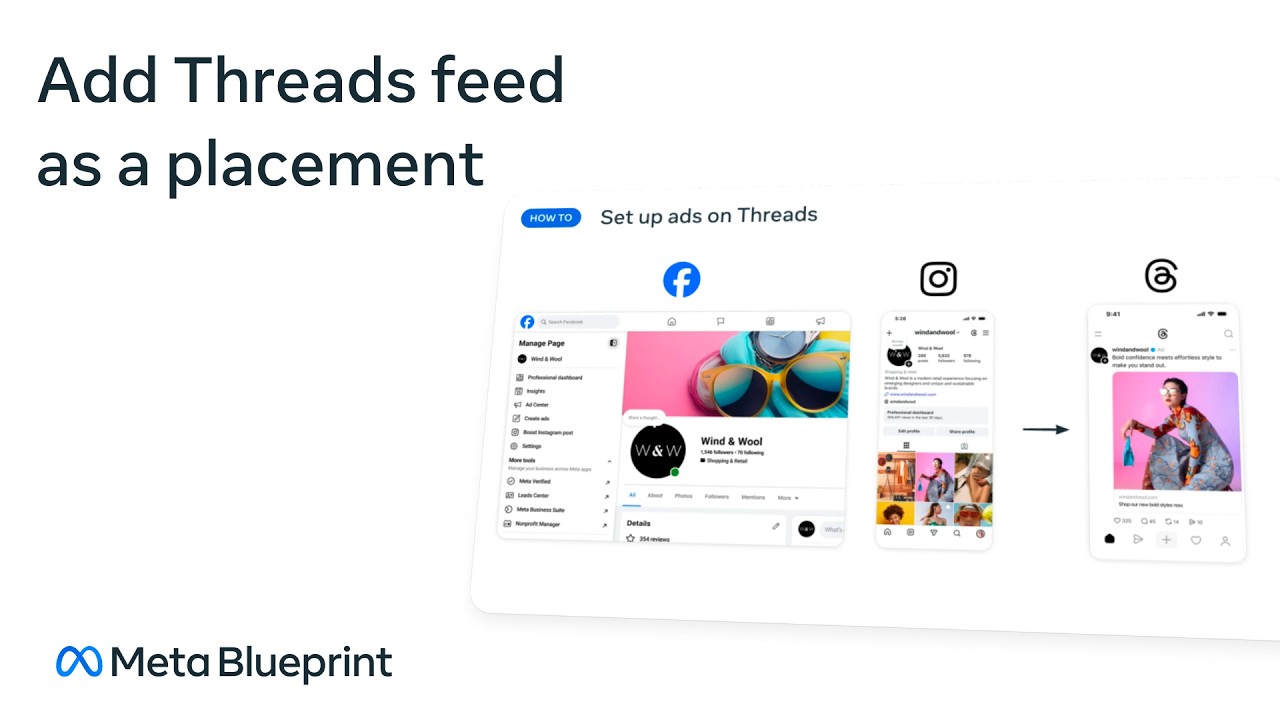
| Threads | Yes, as part of a Meta campaign. Meta's developer blog said on March 25, 2026 that app ads can be bought on Threads globally, with app installs among the supported objectives | The Threads feed placement reuses the image, video or carousel you already made for Instagram |
| TikTok | Yes. TikTok's app promotion guide covers app install and retargeting campaigns in Ads Manager | TikTok's budget page requires a daily budget above $50 for a campaign and above $20 for an ad group |
| No. LinkedIn's list of ad objectives covers brand awareness, website visits, engagement, video views, lead generation, website conversions, job applicants and talent leads, and none of them is app installs | Use website visits with an App Store campaign link, and measure downloads in App Store Connect | |
| No. Its five objectives, listed in the section above, include none for app installs | Pay for outbound clicks with the consideration objective and read the result on the campaign link |
So for installs, Meta and TikTok are the two real options, and Meta covers Instagram, Facebook and Threads with one campaign. LinkedIn and Pinterest can still send paid traffic to the App Store, but you buy clicks and do the install counting yourself. We could not open X's ad help pages to confirm its current objectives, so it is left out of the table. The details of each campaign type are in the guides to Instagram and TikTok.
Common mistakes when choosing a network
- Choosing the network you scroll yourself. Your habits are not your users' habits, so check the age and gender columns.
- Ranking networks by global user counts. A network can be huge worldwide and small among the people who can buy your app.
- Opening all eight accounts in launch week and abandoning six. An empty profile with one post from March looks worse than no profile.
- Committing to a video network without time to make video.
- Posting one crop everywhere. A square image wastes space in a 4:5 feed and gets cut on Pinterest. The social media image sizes guide lists what each network expects.
- Skipping measurement. Without one campaign link per network you are guessing.
Where Spreadcast fits
Spreadcast is built for the case where the choice of network should not depend on design time. You paste your App Store link at the start page, and it checks your public listing every day. A new version, a new 5 star review or a rating milestone becomes a designed 1080 by 1350 still image post with a caption written for each network. It publishes to seven of the eight networks in this guide (every one except X) and to Telegram, so adding a third or a fourth means connecting an account, with no extra design time. Two limits are worth knowing before you pick. LinkedIn posts go to your personal profile, not a company Page. And TikTok only shows Spreadcast's posts publicly once TikTok has audited its app, so until then TikTok posts stay private, as the TikTok MCP server guide explains. It makes still images, so filming video for TikTok remains your job. The Free plan gives you post drafts to download, and Pro at $29 a month publishes for you, as listed on the pricing page.